DermDetect: AI for skin cancer diagnosis
DermDetect: AI for skin cancer diagnosis
DermDetect: AI for skin cancer diagnosis
DermDetect
Client
DermDetect
Client
3 months
Duration
3 months
Duration
AI
Expertise
AI
Expertise
Traditionally, diagnosing skin cancer involves a lengthy, multi-step process starting from an initial dermatologist consultation to obtaining biopsy results, often lasting a week or more. Dermatologists face challenges such as accurate lesion classification, timely intervention, and reducing unnecessary biopsies. This prolonged and occasionally inaccurate process creates anxiety and delays critical treatments, negatively impacting patient health outcomes.
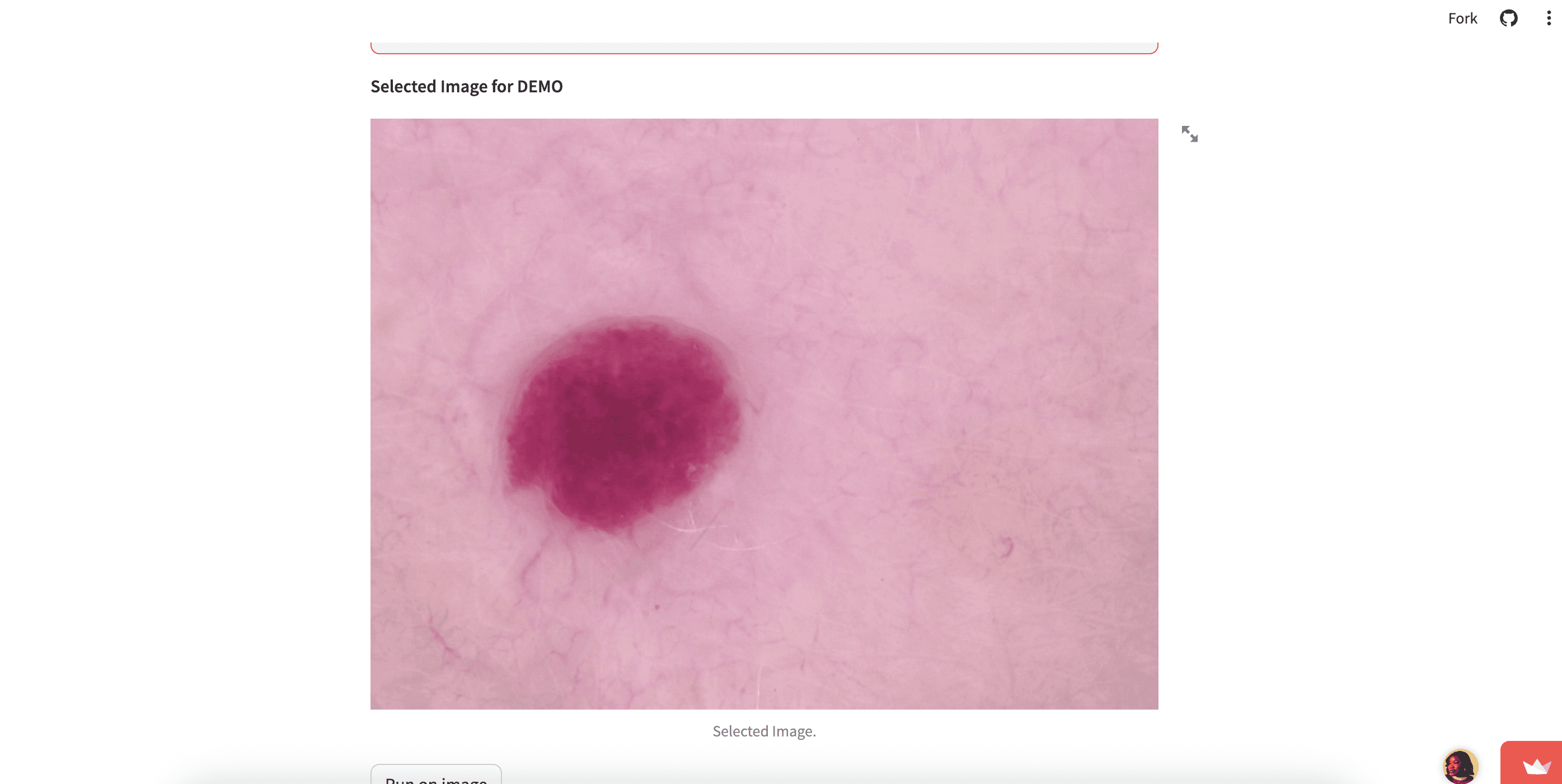
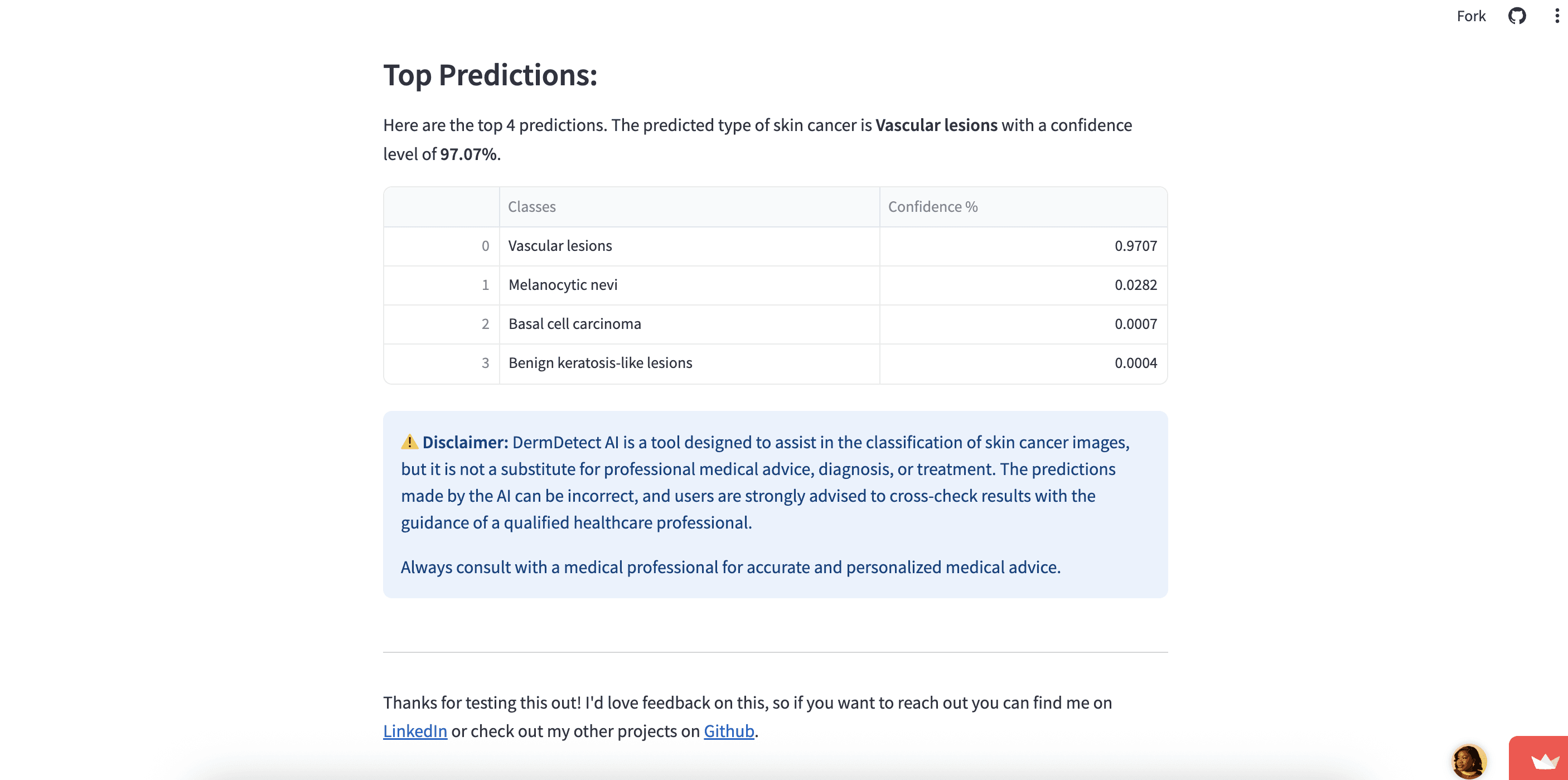
DermDetect leverages cutting-edge artificial intelligence to transform skin cancer diagnosis. By integrating a deep convolutional neural network (DenseNet121), trained on extensive and diverse skin lesion datasets, the platform provides accurate, rapid, and automated classifications of skin cancer types from medical images. This approach significantly shortens diagnosis time and enhances precision, offering a vital tool for dermatologists.
Key Objectives:
Early Detection: Accelerate the diagnostic process, significantly reducing the time from consultation to biopsy.
Improved Accuracy: Utilize AI-driven algorithms trained on diverse datasets to achieve higher diagnostic accuracy.
Reduced Human Error: Minimize the possibility of misdiagnoses through reliable and consistent AI analysis.
Enhanced Patient Outcomes: Facilitate early intervention and precise treatments through timely and accurate diagnoses.
Tech Stack & Architecture:
Python & TensorFlow: Used for building and training the DenseNet121 deep learning model.
DenseNet121 Architecture: Selected for its transfer learning capabilities, dense layer connectivity, and proven performance in medical imaging applications.
Jupyter Notebook: For prototyping, model training, and iterative testing.
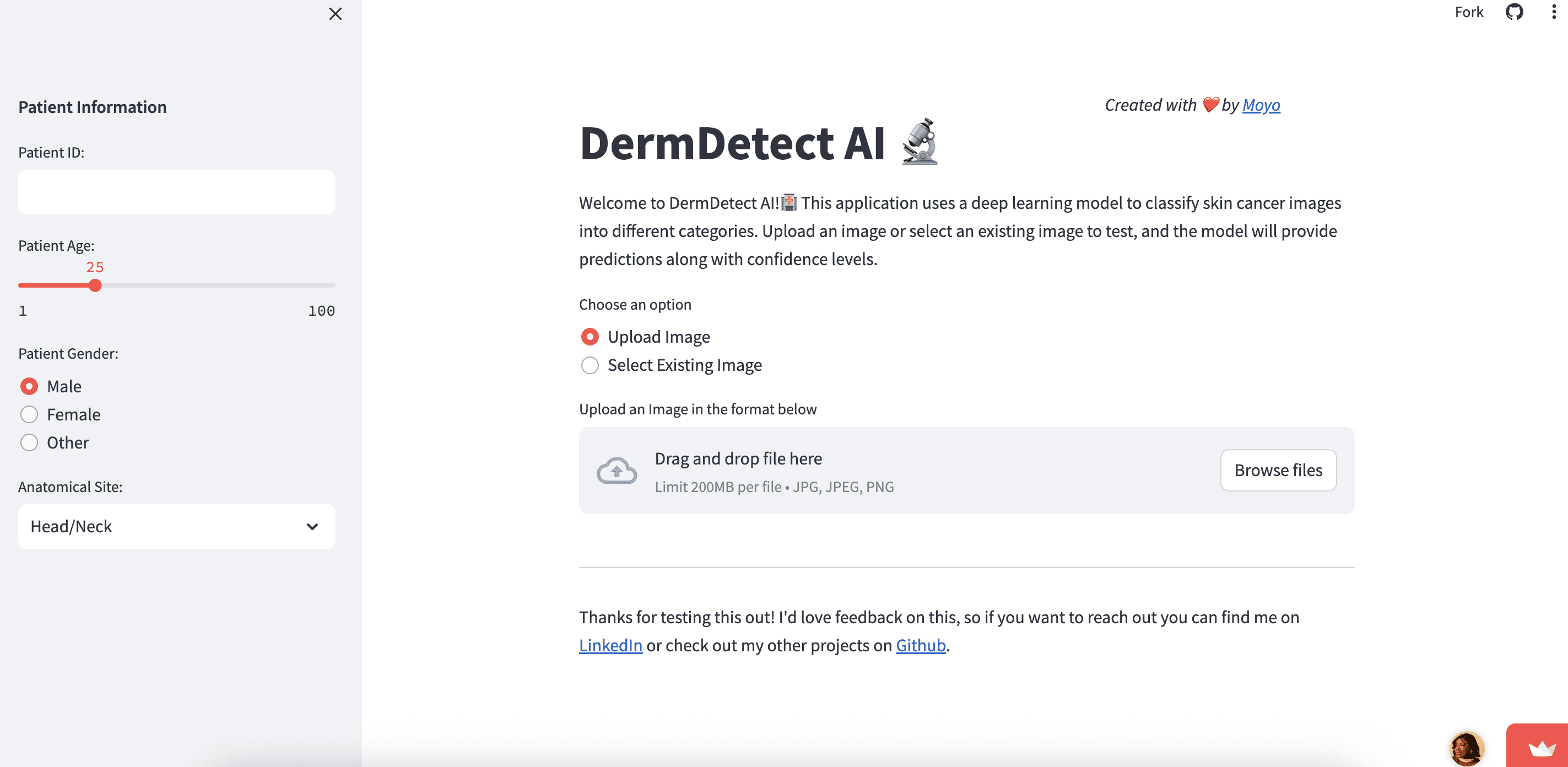
Streamlit: For deploying an interactive, user-friendly application interface.
Datasets Utilized:
HAM10000 Dataset: Contains 10,015 dermatoscopic images with histopathology-confirmed diagnoses, providing diverse and detailed lesion data.
ISIC 2018 Challenge Dataset: Additional skin lesion images to expand the training set, improving model accuracy and generalization.
DenseNet121: Implemented a deep convolutional neural network known for its effectiveness in image classification tasks.
Data Preprocessing: Processed and augmented the dataset to ensure diversity and improve model performance.
Model Training & Validation: Trained the model on a large dataset of skin lesion images, rigorously validating its accuracy and generalizability.
DermDetect streamlines skin cancer diagnosis, drastically cutting down the waiting period from initial consultation to biopsy confirmation. By improving diagnostic accuracy and reducing unnecessary biopsies, this solution empowers dermatologists to provide quicker, more precise treatments, significantly improving patient outcomes and transforming dermatological care.